So I'm swamped with my second job starting up again FYI -- you'll be getting more fully thought out posts later, but I wanted to talk about more things booksellers & buyers can do about whitewashing.
First of all, talk to all your publishers reps (or get your buyers to talk to them) about whitewashing generally and the examples we've seen lately specifically. Don't assume that your reps know what's going on in any detail at all, or that they're even aware that there's a controversy. Show them specific examples in their catalogues of excellent books and less excellent ones. Don't just talk about whitewashing of covers, but also of the need for more genre fiction with main characters of color. Talk to them about J. Woodson's covers being all blurred out or not having people on the cover at all. Tell them about great examples put out by other publishers.
But it's not enough to just talk to your reps. This seems counter-intuitive to me, but from everything all of my reps have told me, their word counts for pretty much nothing with the marketing folk. (You'd think publishers would want to listen to the folk in the field, but no). So you must also write letters to the publishers yourselves, identifying yourself as a bookseller/buyer/manager/etc. Target the sales departments and the senior executives of the company. Be nice. You catch more flies with honey. They're just following the money so show them how their racism is going to bite them in the butt. I'll post my letter soonish as an example.
But if you want to have the most impact, get your act together a little bit and get your customers to sign a petition that you will later send to publishers stating "We will buy books with people of color on the cover no matter what race we ourselves are." Go in to more detail, tell them all the things you want to see (not what you don't), use positive phrasing, tell them you appreciate the good books they've already published. Send the petition to every major publisher you order from whether they've been part of the recent controversies or not. Put the petition at the desk, certainly, but set up an online petition that your facebook & twitter fans can sign and you'll get way more response. Don't just direct them to a petition that's already been set up. Get them to sign yours and then print that sucker out and send that big fat envelope to the publisher with a note that say "LOOK. ALLLLL of these customers of ours are saying that THEY will buy books with kids of color on the cover. Get to it."
But it's still not enough. If you want to really change things it's not enough to just get customers to sign the petition. After all, very few people who you explain it to are going to refuse to sign it. It's not the signing that matters. Their opinion doesn't really matter, their actions matter. It's changing their buying habits that you really want to do. You have to get them to really understand that publishers are putting racist covers on books because they think that that they won't sell otherwise. You must get your customers to actually consciously commit to buying more books with people of color on the cover. And not just for today. Your goal has to be to get them to change their habits long term. You're going to need a Really Serious Life Changing Display-A-Mundo of Power, my friend. I'll post pictures of ours later (when I have access to a camera), but think about making a window display. Hell, it's black history month, lets do something useful for once. Make that display really, really clear. Put lots of example books in the window with notes to explain them. Post copies of articles about whitewashing. Use big clear text. Tell people to sign the petition inside. Don't forget that customers have attention spans the size of a pea. Make a smaller display inside to remind them about the problem. Put a sign at the desk reminding them to sign the petition. Remember that customers don't read signs, remind them verbally when they check out. Don't be afraid to put that pressure on. You're an independent bookstore, after all, taking a stand is what you're supposed to be all about.
When you're done with all this, send each publisher a fat envelope of the petition, pictures of your windows and display(s) (don't forget to claim that co-op either!), copies of articles about white washing, and your own letter explaining that you are so not down with whitewashing, and giving specific examples of what you'd like to see from publishers in the future in regards to race. And keep the pressure on, don't let your customers, reps, or publishers forget about it. This isn't over when covers have been changed and it won't be done when black history month is over. Keep calling publishers out on their crap.
Showing posts with label youth. Show all posts
Showing posts with label youth. Show all posts
Tuesday, February 9, 2010


Tuesday, January 19, 2010
Whitewashing in the Publishing Industry: A Response to the BloomsburyFAIL
This post began as a response to a comment on the Jezabel thread about the whitewashing of Magic Under Glass, a new young adult book about a girl of color that has a white girl on the cover. GalNovelty, Bookshop, and Reading in Color as well as many others also have blogged about this. The book is put out by Bloomsbury (part of Macmillan) who last season did the same thing to another book, Liar. The blogosphere freaked out and the cover was changed (to a picture of a very light-skinned girl whose hair is mostly covered up). A commenter on Jezabel questioned whether there was really a specific thought that "black covers don't sell" instead of just not much thought being put into what goes on the cover of a book. This is my response.
I work as a children's book buyer at an independent bookstore and interact with publisher reps regularly. I have frequent conversations with my reps about how books are packaged (novels as well as picture books) in which I point out the problematic racism, sexism, heterosexism, & general kyriarchy in them. I would actually say that quite a lot of thought goes into how books are packaged and marketed -- just not a whole lot of socially conscious though. Just look at how many different covers a single title will have in it's publishing history. Publishers are well aware that the way a cover looks affects that title's sales and they will put a cover on a book that they think will help it sell. Clearly they think that books with black kids on the covers don't sell. Whitewashing is not something that happens by accident. One of my reps frankly asked me whether our books with black children on the cover sold. She also told me that she's been told by some of her other buyers that their customers are reluctant to buy books recommended to them if there's a black kid on the cover. Penguin just released a whole new set of covers for Jacqueline Woodson's books that either have no child at all on the cover or have racially-vague depictions of children. The washing out of books with children of color protagonists is not an accident.
However, it is not the only problem at play here. I don't think we should write off the role of the buying public with sarcastic jokey comments about "But White People Won't Buy Teh Books About People of Color!" Many people who buy YA & kids books buy them as gifts. Just as there is an (apparently a-okay) perception that boys won't read books about girls, I'm quite certain that there is a (mostly unstated) assumption that The White Child I'm Buying This Book For Won't Be Interested in A Book About a Black Kid. We live in a racist society. People make racial-charged decisions about the books they're buying. We can't only call publishers out on the covers they put on books. We also have to do activist work around what books people buy for their children.
Similarly, it seems like a whole helluvalot of the books that do have black kids on the cover are historical fiction about slavery, the civil war, jim crow, and the civil rights era. There absolutely should be many YA and kids books about these topics. Absolutely. However, where are the books about black and of-color children who are having adventures, going on quests, battling vampires, falling in love, dealing with school issues, solving mysteries, telling stories about their families, finding out they're magicians? -- all those things that white characters get to do without having to think about their race. There need to be more books for kids of color to read that aren't constantly reminding them (and the white readers) that Kids of Color Are Oppressed.
Just to be clear, I'm not knocking books that deal with serious issues of oppression -- that is a very important issue needing to be covered in YA & kiddie lit. But it's also important that kids of color get to have fun in their books. It's important for them, and it's also important for white kids (and their parents) to see that not every story about kids of color is going to be historical fiction. That hey, if they like fantasy/mystery/contemporary realistic fiction, they don't have to be surrounded by white characters. Perhaps part of the reason that some white people don't buy books with black kids on the cover is that their main experience of books with kids of color on the cover is historical fiction about oppression. Maybe the think: "black kid on the cover --> historical fiction --> slavery --> educational book --> not fun --> i want a fun book for my kid --> they won't want to read that --> i'm buying something else." I'm not condoning this line of thinking, but it's not really being countered by a publishing industry that doesn't seem to be publishing a whole lot of books where the black characters get to have some fun. To be fair, there are some out there -- many small and independent publishers like Lee and Low do a great job -- however the mainstream large publishing houses are not at all doing a spectacular job (The True Meaning of Smekday & Ziggy and the Black Dinosaurs are a few awesome exception to this).
It's not enough to call for black kids to be on the covers of kids books. We need to call for more books about kids of color that are not just about oppression. We need to call for fantasy/mystery/scifi/romance/genre fiction about kids of color who get to have some fun. We need to call for major mainstream publishing houses to start publishing such books. And we can't let them get away with sticking the lightest-skinned "ethnic-looking" person they can find on the cover when we make a fuss. I mean, come on, the girl on the new cover of Liar? She could be black, sure. But it's not super immediately clear is it? You're not wrong if you think that this was done on purpose.
It is RARE that I see dark-skinned unambiguously Not White kids of color portrayed anywhere in kids books (Kadir Nelson is an awesome exception to this) -- from the covers of YA books to the illustrations in picture books, most kids of color are depicted as extremely light skinned. Most black kids (especially the girls) are also depicted with straight hair. Not that light-skinned straight haired people of color shouldn't be depicted anywhere, but the huge preponderance of them in kiddie/YA literature about kids of color is motivated by racism. Publishers MUST be called out on this, and not just by a few kids buyers sitting down with their rep and saying so. Buyers need to refuse to buy any frontlist titles from Bloomsbury at all this season. Those of us who see a problem must unambiguously say so.
Absolutely, boycott. The publishing industry is on it's last tottering knees -- they are extremely focused on money and that is the way to reach them. Write them angry letters -- tell them you want to read books about kids of color that have unambiguously Not White kids of color on the cover. Tell them you want to see more genre fiction about kids of color that aren't historical fiction. Tell them you want picture books with darker-skinned kids who haven't had their hair straightened. Tell them how awesome books, authors, and illustrators like True Meaning of Smekday, Kadir Nelson, Sharon Draper, etc are. Tell them that you're a POC and you want all this. Tell them you're white and you want all this. Buy books with kids of color, read books by authors of color. Support your independent booksellers who take pains to carry books that don't promote oppression and who deliberately carry books from independent presses and by unestablished authors doing new things. Buy books from independent bookstores staffed and owned by people who care about social justice.
Just for a point of reference, here are the big big big publishing houses (who for the most part need to get with the program). Contact them!
Random House (includes Knopf, Yearling, etc)
Harpercollins (includes Hyperion, Disney)
Scholastic (bills through Harpercollins)
Penguin Putnum (includes Puffin, Dorling Kindersly, Dial, Speak, Dutton, Viking)
Simon and Schuster
Hachette Book Group (includes Little Brown)
Macmillan (includes Bloomsbury, Tor Forge, etc)
Houghton Mifflin Harcourt
And just think, this post only addresses racial problems with kiddie lit. There are just as many problems with the depiction of gender, sexuality, sex, class, (dis)ability, you name it.
I work as a children's book buyer at an independent bookstore and interact with publisher reps regularly. I have frequent conversations with my reps about how books are packaged (novels as well as picture books) in which I point out the problematic racism, sexism, heterosexism, & general kyriarchy in them. I would actually say that quite a lot of thought goes into how books are packaged and marketed -- just not a whole lot of socially conscious though. Just look at how many different covers a single title will have in it's publishing history. Publishers are well aware that the way a cover looks affects that title's sales and they will put a cover on a book that they think will help it sell. Clearly they think that books with black kids on the covers don't sell. Whitewashing is not something that happens by accident. One of my reps frankly asked me whether our books with black children on the cover sold. She also told me that she's been told by some of her other buyers that their customers are reluctant to buy books recommended to them if there's a black kid on the cover. Penguin just released a whole new set of covers for Jacqueline Woodson's books that either have no child at all on the cover or have racially-vague depictions of children. The washing out of books with children of color protagonists is not an accident.
However, it is not the only problem at play here. I don't think we should write off the role of the buying public with sarcastic jokey comments about "But White People Won't Buy Teh Books About People of Color!" Many people who buy YA & kids books buy them as gifts. Just as there is an (apparently a-okay) perception that boys won't read books about girls, I'm quite certain that there is a (mostly unstated) assumption that The White Child I'm Buying This Book For Won't Be Interested in A Book About a Black Kid. We live in a racist society. People make racial-charged decisions about the books they're buying. We can't only call publishers out on the covers they put on books. We also have to do activist work around what books people buy for their children.
Similarly, it seems like a whole helluvalot of the books that do have black kids on the cover are historical fiction about slavery, the civil war, jim crow, and the civil rights era. There absolutely should be many YA and kids books about these topics. Absolutely. However, where are the books about black and of-color children who are having adventures, going on quests, battling vampires, falling in love, dealing with school issues, solving mysteries, telling stories about their families, finding out they're magicians? -- all those things that white characters get to do without having to think about their race. There need to be more books for kids of color to read that aren't constantly reminding them (and the white readers) that Kids of Color Are Oppressed.
Just to be clear, I'm not knocking books that deal with serious issues of oppression -- that is a very important issue needing to be covered in YA & kiddie lit. But it's also important that kids of color get to have fun in their books. It's important for them, and it's also important for white kids (and their parents) to see that not every story about kids of color is going to be historical fiction. That hey, if they like fantasy/mystery/contemporary realistic fiction, they don't have to be surrounded by white characters. Perhaps part of the reason that some white people don't buy books with black kids on the cover is that their main experience of books with kids of color on the cover is historical fiction about oppression. Maybe the think: "black kid on the cover --> historical fiction --> slavery --> educational book --> not fun --> i want a fun book for my kid --> they won't want to read that --> i'm buying something else." I'm not condoning this line of thinking, but it's not really being countered by a publishing industry that doesn't seem to be publishing a whole lot of books where the black characters get to have some fun. To be fair, there are some out there -- many small and independent publishers like Lee and Low do a great job -- however the mainstream large publishing houses are not at all doing a spectacular job (The True Meaning of Smekday & Ziggy and the Black Dinosaurs are a few awesome exception to this).
It's not enough to call for black kids to be on the covers of kids books. We need to call for more books about kids of color that are not just about oppression. We need to call for fantasy/mystery/scifi/romance/genre fiction about kids of color who get to have some fun. We need to call for major mainstream publishing houses to start publishing such books. And we can't let them get away with sticking the lightest-skinned "ethnic-looking" person they can find on the cover when we make a fuss. I mean, come on, the girl on the new cover of Liar? She could be black, sure. But it's not super immediately clear is it? You're not wrong if you think that this was done on purpose.
It is RARE that I see dark-skinned unambiguously Not White kids of color portrayed anywhere in kids books (Kadir Nelson is an awesome exception to this) -- from the covers of YA books to the illustrations in picture books, most kids of color are depicted as extremely light skinned. Most black kids (especially the girls) are also depicted with straight hair. Not that light-skinned straight haired people of color shouldn't be depicted anywhere, but the huge preponderance of them in kiddie/YA literature about kids of color is motivated by racism. Publishers MUST be called out on this, and not just by a few kids buyers sitting down with their rep and saying so. Buyers need to refuse to buy any frontlist titles from Bloomsbury at all this season. Those of us who see a problem must unambiguously say so.
Absolutely, boycott. The publishing industry is on it's last tottering knees -- they are extremely focused on money and that is the way to reach them. Write them angry letters -- tell them you want to read books about kids of color that have unambiguously Not White kids of color on the cover. Tell them you want to see more genre fiction about kids of color that aren't historical fiction. Tell them you want picture books with darker-skinned kids who haven't had their hair straightened. Tell them how awesome books, authors, and illustrators like True Meaning of Smekday, Kadir Nelson, Sharon Draper, etc are. Tell them that you're a POC and you want all this. Tell them you're white and you want all this. Buy books with kids of color, read books by authors of color. Support your independent booksellers who take pains to carry books that don't promote oppression and who deliberately carry books from independent presses and by unestablished authors doing new things. Buy books from independent bookstores staffed and owned by people who care about social justice.
Just for a point of reference, here are the big big big publishing houses (who for the most part need to get with the program). Contact them!
Random House (includes Knopf, Yearling, etc)
Harpercollins (includes Hyperion, Disney)
Scholastic (bills through Harpercollins)
Penguin Putnum (includes Puffin, Dorling Kindersly, Dial, Speak, Dutton, Viking)
Simon and Schuster
Hachette Book Group (includes Little Brown)
Macmillan (includes Bloomsbury, Tor Forge, etc)
Houghton Mifflin Harcourt
And just think, this post only addresses racial problems with kiddie lit. There are just as many problems with the depiction of gender, sexuality, sex, class, (dis)ability, you name it.
Monday, November 9, 2009
Books Are Not For Hurting: A New Series!
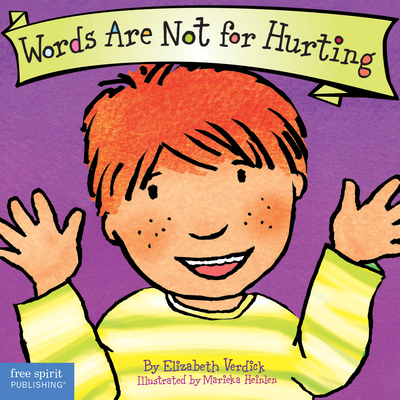 So as you probably noticed, I haven't written squat since May. However I'm back with a new series of posts about bigotry and unintentional bias in children & teen's literature. And lo, it shall be, and I shall call it "Books Are Not For Hurting!"
"Why?" you might be saying to yourself, "Why oh why should I care about Curious George and The Bernstein Bears when over 400 women have been murdered along the US/Mexico border?" Heads up, the messages we send kids when they're young -- be it through picture books, movies, tv, etc -- impact how our society changes (or doesn't) to address issues of social injustice like the inattention to what's going on in Juarez. Society starts early with messages that non-white bodies don't count when it fails to provide a noticeable body of literature featuring kids of color. Obviously, this also affects women, queer people, differently-abled folks, and so on. So as a background to why kids books aren't a utoptian playground of egality and justice, let's review! (Major h/t to Packaging Girlhood)
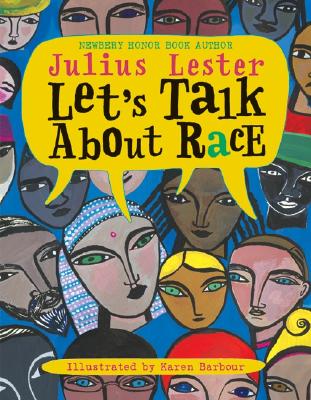 I'm a children's book buyer, so I see pretty much all the books that are published by major publishing houses each year. Most publishers send a box of samples of the picture books they are putting out for the season, along with a selection of uncorrected proofs of the novels, and of course a catalogue. I haven't had time to do any intensive counting and statistical-ness, but I'd estimate that 90% of the books that are published feature white children as the main protagonists. A growing number of picture books are featuring children of color as well as white protags, but most of these have kids of color in the background -- they are rarely the main protag of the book. Those books that feature children of color rarely have a child of color on the cover, and are frequently about serious subjects such as racism, slavery, the civil rights movement, etc. It is very rarely that I see a book with a main protag of color in which that child's race is not somehow related to the main problem of the novel/picture book.
 I'm often left thinking, Gosh, wouldn't it be nice if Fancy Nancy was black? or Wouldn't it be great if I'll Love You Forever featured latino kids? or Goddamnit I wish I could find a happy story about a black kid that isn't about racism!" Additionally, lots of books that have a main character of color end up with a white kid on the cover, à la the to-do about Justine Larbalestier's Liar which, despite being about a black girl, originally featured a white girl on the cover until there was major outcry.
And that's just the tip of the problem in regards to race. Think about how many picture books designate the "girl" animals with a hair bow, pink, skirts, or heavy eyelashes, whereas the normal animal is left to be read as the boy -- the boy as the default, the girl as altered, inauthentic & performative, if we're going to get academic about it (h/t Julia Serano).
 If a parent is featured, it is almost always a mother, particularly in any books featuring daily activities like washing, eating, cooking, hugging, etc -- you know, because dads don't care about their kids, that's the mom's job.
Which moves us on into relationships (what up Twilight?) Ah yes, the ever-popular fetishization of violence, most notably in the soon to be published Stolen by Lucy Christopher which apparently (according to the packaging, I haven't read it yet) describes a young woman's quest not to fall in love with her abductor and potential rapist.
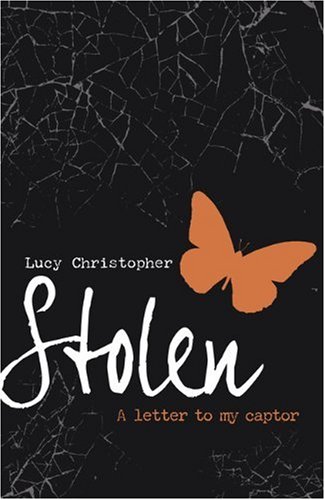 Admittedly it could be that Stolen is actually a well written book, and that it's just packaged badly, but it's indicative of what the publishing industry thinks is appropriate romance lit for teen girls: power imbalance, threats of violence, stalking, etc. (FYI, I'll actually be reading Stolen and posting a review later, so stay tuned). Then there's also all the heteronormativity (the always awesome Renee touches on this), not to mention the internalized homophobia in the coming-out books.
Oh I could go on forever (and do, on my goodreads feed). Trust me, the kiddie lit scene is fucked up. But the point is, we need to be talking about this more. The messages that kids get when they're young from picture books and novels are not neutral. Pictures are not neutral. We tend to think about books as being so much better for children than TV, magazines, the internet, and so on, but picture books and kids novels are subject to the same bias and bigotry that's present in the rest of our society. In fact kids books are probably a stronger hold out for conservative "values" since we have to Protect The Children and The Quality Of The Written Word and all. So! Welcome to my new series on kid's lit! I'll be getting together a list of questions to use as a tool when thinking about kid's literature, and I'll be using them to review stuff. And it won't all be negative either -- I'll also be posting profiles of authors, illustrators, books and publishers that are doing an awesome job. Hooray!
 (Note Martha, dressed in a pink skirt with a flower on her head, while George isn't even wearing pants).
Sunday, March 29, 2009
Boys Will Be Boys: Everyday Misogyny in the Classroom
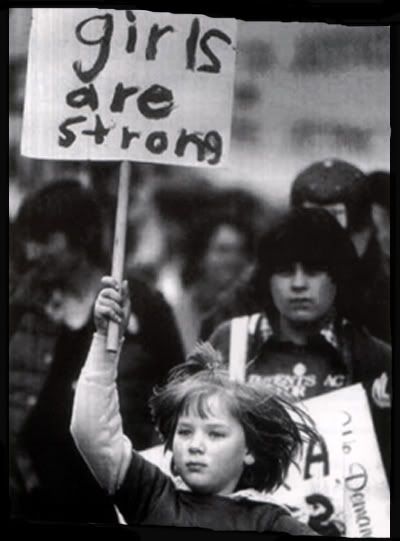
So I tutor groups of exchange students at a school grades 5 through 9. As soon as I started working there, I noticed that it was 90% boys; however, most of my classes have (obviously) had only boys in them, so gender relations hasn't come up much. My class this semester, however, has 7 students, only 2 of whom are girls. (Two of the five in the entire school, mind you). The boys in this class will regularly refuse to sit next to the girls or to be on teams with them. They make faces and groan when I make them work together. At first I wasn't sure what to do exactly because of course the same thing happened to me when I was in school. I was just like "oh well, that's what kids do, they pretend that boys and girls have cooties."
But really, it's sexist and hurtful and I'm not having it. Maybe it's different in schools where the gender ratio is more balanced -- maybe it's not sexist then -- I'm not sure, I still have to think about it. But what has been going on in my classroom has certainly been a product of a misogynistic mindset. My students and I have talked extensively about race and racism this semester and the conversations we've had have been very productive and strongly felt. When responding to homophobic remarks I have explained to them that hating someone because they're gay is the same mindset as hating someone because of their race. I have to say that I haven't heard a single homophobic slur since. When I talked to them about the misogyny that's been going on I drew a similar parallel. I'm not sure that the main ringleader was much fazed, but the four other boys looked pretty abashed. And, as a teacher, if you can the followers on your side, you've already gone a long way towards controlling your troublemaker.
What would happen if teachers across the country started refusing to let boys ostracize girls simply for being female? What would happen if teachers started calling boys on being sexist and proactively taught their young students about the effects of sexism, racism and other prejudices? Not just as a history lesson mind you, but to say: "Here, we've learned about racism in the past. We've learned about Muhammad Ali and the Civil Rights Movement. Here are the ways that you are perpetuating the same hateful thinking in your own life. This is the way that fear of difference goes down in our classroom. How do you feel about it? What are you going to do about it?"
Subscribe to:
Posts (Atom)

 Posts
Posts

