Sweet Honey in the Rock performs "Peace." Check out their Live in Carnegie Hall album. It has a bunch of awesome pieces on it like "Letter to Dr. Martin Luther King," "Emergency" (about apartheid) "Ode to the International Debt," and "Are My Hands Clean" (corporate greed & sweatshops).
Sunday, February 15, 2009


Saturday, February 14, 2009
To grow up hypnotized / and then try to shake yourself awake / because you can sense what has been lost / you can sense what is at stake
"Unless one lives and loves in the trenches, it is difficult to remember that the war against dehumanization is ceaseless."
-- Audre Lorde
So, I've written about this before, but I want to say it again because I think it's really important. I've been thinking tonight about how easy it is to forget the truth if you don't hear it being consistently repeated to you. Even if it's something you know is true. Even if it's something that you discovered yourself. Even if it's something you've written about extensively. If it's not something that's reinforced by society, if it's not something you hear about all the time, if it's not something you make a conscious effort to remember, you'll forget about it. You'll have a vague feeling that something is wrong, something is not right, but you won't be able to remember why.
I remembered this today because I was trying to explain to my friend C that a person could be "unwilling to come out" even if they have supportive friends and family. And I knew that it was possible, I knew that "unwilling to come out" wasn't really the right words, I knew that I had experienced it for christsake, but I couldn't remember what was wrong with it. Fortunately I happened to be rereading my journal tonight and I figured out why. It's not because they don't want to come out, it's because sometimes they don't realize they're Queer. Because it's not been presented to them as an option, because they're still trying to reconcile themselves with what society is telling them
It's the same thing with not having your truth repeated to you on a daily basis. Our society can prattle on as much as it wants about tolerance and acceptance and live-and-let-live, but being Queer is still not presented as a viable option for children's future selves. If the social models you're presented with don't fit with your own identity, you're left walking around with this weird vertigo -- wasting your time trying to fit your identity into the models you've been given.
For example, I can't believe how much time I wasted feeling insecure and outsiderish because the idea of being attracted to women was never presented to me as a personal option. I knew people were gay. I knew gay people, but certainly that was never something that I would ever be. It's great to say that we're accepting of difference and that we support people in loving whoever they want -- but society gives zero models for how to live your life as a Queer person. So if you are Queer, you spend the first 20 or so years of your life wasting time trying to fit your understanding of society and your personal experiences together -- trying to squeeze yourself into a mold that you don't fit.
It doesn't mesh, so even if you don't have a big dramatic angsty personal crisis of feeling unfit to live, you still have this weird vertigo of being unable to understand and name the things you're going through and the way you feel. It's not like I was ever like "Oh my god, I'm attracted to a girl! I don't understand!" Nothing so overt or dramatic. Because for the longest time I didn't even realize that I was Queer. I just spent years berating myself for not being proactive about flirting with boys and not putting myself out there for dating them. I certainly wanted to date a boy, in the theoretical at least, because society presents it as the ultimate experience for women, and it seemed exciting and it was SO LAME not to. But at the same time I was terrified around boys that they would think I was attracted to them. But I didn't even realize that that was why I was so awkward and apprehensive and terrified -- thinking it was because I was stupid and too wrapped up in not wanting to do the stereotypical dating thing. Feeling CRAZY insecure for YEARS because I had never kissed anyone, even though there was never anyone I wanted to kiss.
What a waste of my time. I could have been having (or at least pursuing) relationships with people I was actually interested in. I feel quite certain that if I hadn't spent 4 years at a women's college where there were plenty of women who were repeating truths similar to my own, that I would still be wandering around trying to date men, wondering why I was so unhappy, and blaming myself for it. That's why it is SO important for Queer people and their friends to be visible and publicly Queer and present that as an option for other people. Not because of some stupid HRC-ish reason about trying to gain "tolerance" by showing that "we're just like you." We're not just like you. That's the point. We have to speak up about our own truths so that others can find their own way into their selves and stop trying to cram themselves into what society tells them.
It's scary to think that our selves are so mutable, so influenced by the messages we get from society, so easily erased by the company we keep and the things our friends say to us. I guess in some ways it's powerful because it means that one or two people can easily have a profoundly positive impact on another person, but it also means that a person's convictions, identity and self can be essentially erased simply by not having a community of similar people who will repeat their selves and their identities and truths to each other.
So SPEAK UP! Whether you're Queer or not. Tell the truth to children. Acknowledge in casual conversation that people have different identities and different experiences. Make sure that your words and actions don't unintentionally oppress others. Surround yourself with people who will embrace your identity instead of trying to ignore it or assimilate it or trample it down. Repeat the truth of your identity to everyone -- they need to hear it.
"As we are liberated from our own fear, our presence automatically liberates others."
-- Nelson Mandela.
"The power of resistance is to set an example: not necessarily to change the person with whom you disagree, but to empower the one who is watching and whose growth is not yet completed, whose path is not at all clear, whose direction is still very much up in the proverbial air."
--Tim Wise
**Title Lyrics from Reprieve by Ani DiFranco
Saturday, February 7, 2009
Spoken Word Saturdays: Damali Ayo
Damali Ayo panhandles for reparations. She collects money from white people and gives it to black people as a way to start conversations about race, privilege, and oppression. Since she first did this, people have been joining her nationally on October 10th of every year. You can read more about all her performances, read an interview with her about reparations, join the National Day of Panhandling for Reparations, and see pictures and stories from people who participated last year.
Sunday, January 25, 2009
Spoken Word Saturdays: Sista Queen
Whoops, I'm a day late. But here's Sista Queen performing "Try Being A Lady" at the Def Poetry Jam.
Saturday, January 17, 2009
Spoken Word Saturdays: Staceyann Chin
I've been resisting the urge to post this poem every week because I don't want to make Spoken Word Saturdays just a constant stream of Staceyann Chin. But I couldn't resist anymore. Plus I've been reading the Essential Dykes to Watch Out for and I was struck, throughout the entire 20 years of the strip, by the social commentary and the searing indictment of an increasingly corporate and conservative LGBTQ movement. I ranted about this to a reporter at Pride last summer but of course none of it was published.
So in honor of the nauseating slogans we have seen coming out of the mainstream LGBT movement, in honor of "Gay is the New Black," in honor of everyone pushing for marriage before basic human dignity, in honor of blaming people-of-color for Prop 8, in honor of McDonalds being present at Pride, in honor of LOGO and the L Word, in honor of the HRC and The Advocate, Staceyann Chin reads "Poem for the Gay Games."
However, I do have to say that I don't agree with everything she says. This poem constantly challenges me to think more deeply about where I stand politically in the Queer community. Because I think it's okay to say "I just date people." I don't buy into the idea that this constitutes "neoconservatism breeding among us." I think there definitely IS neoconservatism in the Queer community. I just don't think that saying you date people is an example of such. I think sexuality is much more complicated than identifying either as gay/lesbian or straight (or even bisexual). Because it all gets mixed up with how you identify, not just who you're attracted to. I identify most strongly as Queer because it is a politicized sexuality and it's also a pretty broad, encompassing term. I don't identify as lesbian even though I don't realistically see myself dating a guy anytime in the forseeable future. I don't want to imply that that couldn't change. Sexuality is fluid and, personally, I don't see the term "lesbian" as embracing fluidity. I don't think it makes me a neoconservative for not wanting to box myself into a certain term.
So in honor of the nauseating slogans we have seen coming out of the mainstream LGBT movement, in honor of "Gay is the New Black," in honor of everyone pushing for marriage before basic human dignity, in honor of blaming people-of-color for Prop 8, in honor of McDonalds being present at Pride, in honor of LOGO and the L Word, in honor of the HRC and The Advocate, Staceyann Chin reads "Poem for the Gay Games."
However, I do have to say that I don't agree with everything she says. This poem constantly challenges me to think more deeply about where I stand politically in the Queer community. Because I think it's okay to say "I just date people." I don't buy into the idea that this constitutes "neoconservatism breeding among us." I think there definitely IS neoconservatism in the Queer community. I just don't think that saying you date people is an example of such. I think sexuality is much more complicated than identifying either as gay/lesbian or straight (or even bisexual). Because it all gets mixed up with how you identify, not just who you're attracted to. I identify most strongly as Queer because it is a politicized sexuality and it's also a pretty broad, encompassing term. I don't identify as lesbian even though I don't realistically see myself dating a guy anytime in the forseeable future. I don't want to imply that that couldn't change. Sexuality is fluid and, personally, I don't see the term "lesbian" as embracing fluidity. I don't think it makes me a neoconservative for not wanting to box myself into a certain term.
Thursday, January 15, 2009
Study Finds Race Was Not Deciding Factor in Prop 8
Despite disgusting rumors to the contrary, "a new study released this week finds that neither African Americans nor any other ethnicity were disproportionately in support of Proposition 8, which amended California’s constitution to ban same-sex marriage." In fact, the study found that voter's proability to vote in favor of Prop 8 was much more influenced by religion, age and party affiliation than by race. Read more. I'd like to see this as widely known as the rumors of black homophobia. Particularly, I'd like to beam this into the heads of the white lesbians I heard ranting about "black homophobia" at the Prop 8 rally I went to in November.
H/T Racewire/Colorlines Blog
H/T Racewire/Colorlines Blog
Saturday, January 10, 2009
BART Transit Police Spokespeople Vague & Deliberately Misleading About Grant Shooting
BART board president, Thomas Blalock, said in an interview with ABC7 News, that he could not "pull anything factual" from the cell phone videos that show a two-year BART cop pulling his gun out and shooting an unarmed Grant in the back while another officer had his knee on Grant's neck. How anyone can watch that video and then say he "can't pull anything factual" from it is beyond me.
Additionally, despite the videos clearly showing Grant on the ground face-first with a police officer kneeling on his neck, BART spokesman Jim Allison stated that Grant was "not restrained" when shot. In other words, the BART spokesperson is lying.
Furthermore, Alex Jones reports that Spokesperson Allison claimed that BART had no videos of the shooting, even though BART had confiscated the cellphones of many witnesses who were recording. I can't find a clip or other citation of Allison saying this, but it seems crazy that BART would be claiming not to have videos, given that it says on the BART website that "the District also utilizes video-surveillance systems in trains, stations, and parking lots." So in addition to lying about not having video (according to Jones) even though they confiscated the cell-phones, it's like BART doesn't even care since they are flat-out contradicting the information right on their website!
Upon further perusal of the BART website, it seems that BART police are not a part of the local police departments and are "an autonomous law enforcement agency," according to their website. It's not at all clear what this means and what kind of oversight they have to report to, but it's clear that there needs to be more oversight. The Courage Campaign has a petition you can sign, asking the government to create a civilian oversight board for BART. I should also point out that the BART website says that "Qualifications and training for BART police officers exceed the mandates of the state's Commission on Peace Officer Standards and Training, which certifies all California peace officers." Given that, one wonders about the speculation that Johannes Mehserle, the police officer who shot Grant, accidentally reached for his gun instead of his taser. Shouldn't their fancypants training be covering not reaching for a deadly weapon when your partner is kneeling on a victim's neck? For that matter, why did he even need to get out his taser for chrissakes?
H/T Alex Jones < /snirk >
Additionally, despite the videos clearly showing Grant on the ground face-first with a police officer kneeling on his neck, BART spokesman Jim Allison stated that Grant was "not restrained" when shot. In other words, the BART spokesperson is lying.
Furthermore, Alex Jones reports that Spokesperson Allison claimed that BART had no videos of the shooting, even though BART had confiscated the cellphones of many witnesses who were recording. I can't find a clip or other citation of Allison saying this, but it seems crazy that BART would be claiming not to have videos, given that it says on the BART website that "the District also utilizes video-surveillance systems in trains, stations, and parking lots." So in addition to lying about not having video (according to Jones) even though they confiscated the cell-phones, it's like BART doesn't even care since they are flat-out contradicting the information right on their website!
Upon further perusal of the BART website, it seems that BART police are not a part of the local police departments and are "an autonomous law enforcement agency," according to their website. It's not at all clear what this means and what kind of oversight they have to report to, but it's clear that there needs to be more oversight. The Courage Campaign has a petition you can sign, asking the government to create a civilian oversight board for BART. I should also point out that the BART website says that "Qualifications and training for BART police officers exceed the mandates of the state's Commission on Peace Officer Standards and Training, which certifies all California peace officers." Given that, one wonders about the speculation that Johannes Mehserle, the police officer who shot Grant, accidentally reached for his gun instead of his taser. Shouldn't their fancypants training be covering not reaching for a deadly weapon when your partner is kneeling on a victim's neck? For that matter, why did he even need to get out his taser for chrissakes?
H/T Alex Jones < /snirk >
Spoken Word Saturdays: Zora Howard
Okay I found out that I CAN embed the video of Zora Howard performing "Bi-Racial Hair" at the 2006 Urban Word NYC Annual Teen Poetry Slam! I know I posted it before with a link, but it so awesome that I wanted to make sure everyone's seen it. So here it is, in all of its embedded glory:
Oscar Grant, Young Unarmed Black Man Shot By Oakland BART Police
I'm a little late to this, but on the morning after New Year's Eve, Oakland Bart police shot and killed Oscar Grant, a 22 year old black father, who was unarmed and lying face-down on the ground with his arms behind him. There were MANY bystanders and witnesses present who recorded the incident on their cell phones and cameras. You can see footage of their videos here, here, here, and here, although apparently the police immediately tried to confiscate all recording-devices as soon as Grant was shot. There have been protests in Oakland the past few days, which have resulted in rioting and the destruction of property completely unconnected to the incident. The (few) (kind of) major news outlets that I've found covering this story (e.g. San Jose Mercury News, Yahoo News) have focused mainly on the destruction resulting from the riots or on excuses proffered by the police department, and have barely addressed the police-brutality and race issues that this incident brings up. What is it going to take before people take this issue seriously?
Racewire has a list of Five Things You Can Do Right Now About the Oscar Grant Shooting, and Holly and Davey D make good points about why this is more alarming than just an unarmed black man being shot. As if you needed more than that. Holly discusses the police mindset that questioning their actions makes you the enemy, which results in you getting shot (Grant), arrested (Amy Goodman), pepper-sprayed (Holly & Jack), or otherwise harassed. Davey D interviews Dereca Blackman, who asks why police can confiscate cell phones and other recording devices after such an incident, why do police have the privilege to not be interviewed for days after the incident, thus allowing them time to "get their story together," as it were.
We're now being told that it was an accident, that the officer's gun discharged, that he thought he was reaching for his taser, etc. I don't think it really matters, honestly. You can clearly see from the video that there were at least 2 or three officers in physical contact with him. He was on the ground, unarmed, arms behind him -- as Grant's family lawyer asks "WHY did he take his gun out???" (emphasis mine). There was clearly, CLEARLY, no need for him to take his gun out. Christ, Grant wouldn't have even been able to see that he was being threatened with a gun since he was face-down on the ground. This illustrates, oh-so-clearly, the effects of a society that vilifies black and brown bodies and gives deadly weapons to (mainly) white police officers. Renee discusses the racial implications and what she will tell her two young sons about Oscar Grant.
Amid all of this awfulness, I do want to say how awesome it is that the bystanders and witnesses to the shooting were NOT passive bystanders. That they recorded the incident, that they made it clear to the police that they were watching, that they thought what the police were doing was out of line, that they yelled "let him go!" Way to be citizen journalists! Way to do the work. Why do we never hear THEIR stories when people talk about apathetic youth and bystanders who do nothing? Holly has an interesting discussion of what kind of effect this sort of citizen involvement has on the police.
This HAS to be talked about. It's really alarming to me that I found out about Grant's death and the rioting from my friend who lives in Oakland, rather than from the friggin' news. Man, this is the TIME to be talking about police brutality and racial profiling now that we finally have someone sympathetic (and not batshit crazy) in the White House. There need to be nation-wide protests in solidarity to highlight these problems across the country, not just in Oakland, and we need to be talking to our local elected officials about what they plan to do to address police brutality and racial profiling in our own communities. Go organize a protest.
Racewire has a list of Five Things You Can Do Right Now About the Oscar Grant Shooting, and Holly and Davey D make good points about why this is more alarming than just an unarmed black man being shot. As if you needed more than that. Holly discusses the police mindset that questioning their actions makes you the enemy, which results in you getting shot (Grant), arrested (Amy Goodman), pepper-sprayed (Holly & Jack), or otherwise harassed. Davey D interviews Dereca Blackman, who asks why police can confiscate cell phones and other recording devices after such an incident, why do police have the privilege to not be interviewed for days after the incident, thus allowing them time to "get their story together," as it were.
We're now being told that it was an accident, that the officer's gun discharged, that he thought he was reaching for his taser, etc. I don't think it really matters, honestly. You can clearly see from the video that there were at least 2 or three officers in physical contact with him. He was on the ground, unarmed, arms behind him -- as Grant's family lawyer asks "WHY did he take his gun out???" (emphasis mine). There was clearly, CLEARLY, no need for him to take his gun out. Christ, Grant wouldn't have even been able to see that he was being threatened with a gun since he was face-down on the ground. This illustrates, oh-so-clearly, the effects of a society that vilifies black and brown bodies and gives deadly weapons to (mainly) white police officers. Renee discusses the racial implications and what she will tell her two young sons about Oscar Grant.
Amid all of this awfulness, I do want to say how awesome it is that the bystanders and witnesses to the shooting were NOT passive bystanders. That they recorded the incident, that they made it clear to the police that they were watching, that they thought what the police were doing was out of line, that they yelled "let him go!" Way to be citizen journalists! Way to do the work. Why do we never hear THEIR stories when people talk about apathetic youth and bystanders who do nothing? Holly has an interesting discussion of what kind of effect this sort of citizen involvement has on the police.
This HAS to be talked about. It's really alarming to me that I found out about Grant's death and the rioting from my friend who lives in Oakland, rather than from the friggin' news. Man, this is the TIME to be talking about police brutality and racial profiling now that we finally have someone sympathetic (and not batshit crazy) in the White House. There need to be nation-wide protests in solidarity to highlight these problems across the country, not just in Oakland, and we need to be talking to our local elected officials about what they plan to do to address police brutality and racial profiling in our own communities. Go organize a protest.
Saturday, January 3, 2009
Spoken Word Satrudays: Good Sista/Bad Sista
Turiya Autry and Walidah Imarisha of Good Sista/Bad Sista perform "Supa Soul Sistas" at the 2008 Wordstock Poetry Slam
Saturday, December 27, 2008
Travel Tips: San Francsico Bookstores
So I had the great joy of visiting some awesome independent bookstores while I was in San Francisco this weekend. If you happen to be in the Bay Area you should check these bookstores out. Then spend lots of money there to support them! I, myself, had a difficult time not buying more books than I could take home on the plane with me. As it is, some of them might have to be shipped. But am I going to find an out-of-print signed copy of This Bridge Called My Back in St Louis? No way man. So it was money well spent!
Modern Times Bookstore, located in the Mission District, is a collectively run bookstore with a huge selection of latino/a literature and studies books both in English and Spanish, an awesome children's section featuring multicultural and anti-racist books, and a diverse selection of used and new women, gender & LGBTQ studies books. I heart them big time. I am super impressed that they can stay in business.
Dog Eared Books, also located in the Mission, is a pleasantly grubby used bookstore just down from Modern Times. Crammed full of books with surprising little nooks and even more surprising little sections (e.g. beekeeping), Dog Eared Books has a small but decent section of LGBTQ and women's studies books, as well as a classy series of sections on African American, Chicano, Latino, and Asian History and Studies.
Green Apple Books, located in the Richmond District, is HUGE. So huge that "I Married a Green Apple" Maps are distributed throughout the store. Mainly stocking used books, Green Apple also has a selection of discounted new books bought as remainders. This bookstore is so big that I sort of want to refer to it more as a library. This store has STACKS, my friend. I got dragged out before I could thoroughly explore it, however I very much enjoyed getting lost and witnessing the extensive shelf space dedicated to all manner of sections. Cooking was probably 40 feet long. Art was even longer. I didn't even see fiction, but their bookmark says they have a mile of it. I found the previously mentioned out-of-print, singed copy of This Bridge Called My Back in their women studies section.
The Booksmith, located in the Haight, was nice enough, I guess. I don't go in for slick bookstores; I prefer a certain amount of dishevelment that you can poke around in and feel the history, so I'm already a bit predisposed to be hard on the Booksmith. Carrying only new books, The Booksmith is very new looking: very clean, well-lit, well-marked — no mystery at all. I have no doubt at all that the owners of the Booksmith are good folk, probably fairly liberal, and are doing their best to survive as a general-interest, non-niche-based, independent bookstore; however their store shows the stresses of compromising in order to make ends meet. I was alarmed to see staff picks for Twilight (see why this is alarming) and Sweet Valley High, and their identity-studies sections were underdeveloped. The Booksmith is not a bad bookstore, it's perfectly fine as a general-interest store and their displays were very well done; however with so many bookstores to choose from in the Bay Area, there are others I would recommend.
Modern Times Bookstore, located in the Mission District, is a collectively run bookstore with a huge selection of latino/a literature and studies books both in English and Spanish, an awesome children's section featuring multicultural and anti-racist books, and a diverse selection of used and new women, gender & LGBTQ studies books. I heart them big time. I am super impressed that they can stay in business.
Dog Eared Books, also located in the Mission, is a pleasantly grubby used bookstore just down from Modern Times. Crammed full of books with surprising little nooks and even more surprising little sections (e.g. beekeeping), Dog Eared Books has a small but decent section of LGBTQ and women's studies books, as well as a classy series of sections on African American, Chicano, Latino, and Asian History and Studies.
Green Apple Books, located in the Richmond District, is HUGE. So huge that "I Married a Green Apple" Maps are distributed throughout the store. Mainly stocking used books, Green Apple also has a selection of discounted new books bought as remainders. This bookstore is so big that I sort of want to refer to it more as a library. This store has STACKS, my friend. I got dragged out before I could thoroughly explore it, however I very much enjoyed getting lost and witnessing the extensive shelf space dedicated to all manner of sections. Cooking was probably 40 feet long. Art was even longer. I didn't even see fiction, but their bookmark says they have a mile of it. I found the previously mentioned out-of-print, singed copy of This Bridge Called My Back in their women studies section.
The Booksmith, located in the Haight, was nice enough, I guess. I don't go in for slick bookstores; I prefer a certain amount of dishevelment that you can poke around in and feel the history, so I'm already a bit predisposed to be hard on the Booksmith. Carrying only new books, The Booksmith is very new looking: very clean, well-lit, well-marked — no mystery at all. I have no doubt at all that the owners of the Booksmith are good folk, probably fairly liberal, and are doing their best to survive as a general-interest, non-niche-based, independent bookstore; however their store shows the stresses of compromising in order to make ends meet. I was alarmed to see staff picks for Twilight (see why this is alarming) and Sweet Valley High, and their identity-studies sections were underdeveloped. The Booksmith is not a bad bookstore, it's perfectly fine as a general-interest store and their displays were very well done; however with so many bookstores to choose from in the Bay Area, there are others I would recommend.
Spoken Word Saturdays: Jay Smooth
Okay I know I've been way behind with the rest of the features and stuff I want to do with this blog, but you know, it's the holidays... I work in retail so this has been a really crazy fall. New Years Resolution: Stay On Top of Blog.
Anyway here's Jay Smooth of Ill Doctrine on "How to Tell People They Sound Racist."
Anyway here's Jay Smooth of Ill Doctrine on "How to Tell People They Sound Racist."
Saturday, December 20, 2008
Spoken Word Saturdays: Zora Howard & Kelly Tsai
Okay, I wanted to feature Zora Howard today performing her poem, "Biracial Hair" at the 2006 Urban Word NYC Annual Teen Poetry Slam. It's on You-Tube, but you can't embed it, so click here to see it. It's awesome. Check it out. In the meantime, here's Kelly Tsai performing "Mao" at the Def Poetry Jam:
Sunday, December 14, 2008
Spoken Word Saturdays: Yellow Rage
Okay, I'm a bit late with this, but Yellow Rage will more than make up for the delay. I'm channeling their what-the-fuck-do-you-know-about-me-just-because-you-read-a-novel-about-my-identity today. Why is it always the responsibility of the oppressed to answer the nosy questions the privileged class? If you want to know so badly about my identity go to the library. And no, one book does not make you an expert. Instead of tokenizing me with your nosyass questions do some friggin research. THEN we'll talk.
Saturday, December 6, 2008
Book Review: Speaking Treason Fluently
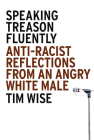 I really wanted to like Tim Wise's new book, Speaking Treason Fluently. And at first I did. The articles at the beginning about Obama's campaign were very interesting and relevant to the election at hand (I started reading it sometime at the end of summer). And upon a recent conversation with some acquaintances who spend less time thinking about social injustice, I can see how this book could be very useful. Wise does a good job of incorporating statistical evidence to back up his argument that racism is still a very relevant problem (although he doesn't do the best job of citing his sources). However Wise's newest book is hampered by his denigrating and insulting tone, a lack of intersectional analysis, and the erasure of experiences of non-African-American people of color.
Despite perhaps being more useful to those who have not yet thought deeply about race-relations, this book is clearly not aimed at them. Wise constantly denigrates and insults the intelligence of racist people. I understand that Wise is angry; I'm angry too, and it's easy to just call racists idiots and dismiss them as not worthy of notice. However, ultimately, this is not a constructive way to deal with the problem of racism. Yeah, it's true, they ARE racist, it's totally condemnable. But let's address the difference between ignorance and stupidity. Most racists are not by definition unintelligent as Wise repeatedly implies, but are uninformed and perhaps have not thought deeply about systematic oppression. Perhaps they have been deceived into believing in meritocracy. Perhaps they are themselves struggling with the horror of working hard and not being able to succeed in a society that tells them that anyone who works hard can make it. Perhaps they are unhappy people who have been poorly treated and deceived by their society/government and are clawing to get ahead by tearing down those who are perceived as being socially less worthy than themselves.
I am not excusing their actions and words; it is ignorant and racist. But also I think probably even you, Tim Wise, were once racist yourself, given that we grow up in a culture that practically insures that white people are inculcated with a belief in their own moral superiority. So perhaps instead of insulting people who are racist, giving up on them, and talking to them as if they're idiots with no chance of ever growing, perhaps you should consider that they ARE YOU. You as you were in your past, before you became Oh-So-Enlightened. No, perhaps you never became as extreme and consciously racist as some of these people, but surely you, who have so well explained the structural basis of racism in our society, can understand how they got to that point? Why not try to talk them through a calm, non-insulting, non-alienating transformation of thought instead of giving up on them? After all, we are all harmed by oppression and ideas of superiority (of course not to the same degree, but it is harmful to all of society), so everyone stands to gain from it's destruction. This insulting tone severely wounds the potential of Wise's book. I would have been much more excited to see an analysis that tried to educate instead of denigrate.
I was also alarmed by the lack of intersectionality and power-analysis in Wise's book. There were occasional off-the-cuff remarks and statistics about non-race-based oppression, however there was no incorporation of the way racism interacts with classism, sexism, xenophobia, heterosexism, etc to affect people of color in very different ways. Nor was their much discussion of an intersectional approach that would attempt to reach out to racist people who — though they may not be racial oppressed — might be oppressed in a different way by the same system that harms people of color. For example, it's easy to rag on low-income whites for being racist when they bring down black people. I mean it's TRUE. It IS racist. However the conversation cannot stop there. Classism is all mixed up in racism, and instead of endlessly raging against the moral corruption of low-income whites who don't stand up for black people, how about some interesting conversation about uniting people who are oppressed by the same system, albeit in different ways? Not to excuse low-income whites from personal responsibility, but to try to actually think of a solution, instead of alienating potential allies by condemning them for wanting to get ahead in a system that has taught them they must oppress others in order to be successful. We need some Dorothy Allison up in here. As she says, "The horror of class stratification, racism, and prejudice is that some people begin to believe that the security of their families and communities depends on the oppression of others, that for some to have good lives there must be others whose lives are truncated and brutal." We need to speak to those who have been thus deceived — people who are, in reality, good people (or at least want to be), but who have become used to thinking and acting in a way that oppresses others, whether intentionally or unintentionally.*
Speaking of intersectional oppression, Wise's book concentrated almost exclusively on the way that racism affects African-Americans (not Black people, not people of African descent globally: African Americans only). There were occasional mention of Latinos, and a few spare references to how America treats Arab-Americans post-9/11, but these remarks were usually thrown in as an aside or as additional statistics to back up Wise's arguments about African-Americans. There was no discussion of the way racism affects Asian-Americans in a very different way from the way that it affects Black people. No discussion of the experiences of mixed-race people. Little conversation regarding the treatment of native and indigenous peoples. There would be nothing wrong with that, except that the book made the claim of addressing racism generally; Wise did not say that he was going to focus only on the way that racism affects African-American people, instead he says he hopes that Speaking Treason Fluently (along with his previous book, White Like Me) will "form... an effective one-two punch at the edifice of racism and white supremacy" (Wise 2008: 7). Thus, by claiming to address the effects of racism generally and then by talking almost entirely about the experiences of African-American people, Wise effectively (if perhaps inadvertently) erases the experiences of a wide range of people of color who are NOT African-American. Mixed-race women living abroad, low-income Vietnamese immigrants, Caribbean-American queer people of color, people of Arab descent, native and indigenous populations around the world — the list of people erased by Wise's analysis is long, and the omission of their stories implies that the racism they face is less severe or perhaps even non-existent. I do not think that this is Tim Wise's perspective, but the lack of a broader perspective on racism could imply to a non-alert reader that non-African-American people of color do not face "real" racism.
Wise does an excellent job of incorporating relevant statistics and news events, and his step by step logical breaking down of racist myths had real potential to be useful in the education of those new to the ideas of racial oppression. Reluctant as I am to knock the well-intentioned attempts of allies trying to combat racism, I have to say that Tim Wise could have done a much better job. His extensive collection of anti-racist writings would have benefited from a less-judgemental tone, an intersectional approach to anti-racism work, and a more inclusive selection of evidence that included the experience of many different people of color.
* One of the parts of Wise's book that stuck with me the most acknowledges, in fact that racists are people too and that they have potential to change. While talking about white-denial he says "Acknowledging unfairness then calls decent people forth to correct those injustices. And since most persons are at their core, decent folks, the need to ignore evidence of injustice is powerful: To do otherwise would force whites to either push for change (which they would perceive as against their interests) or live consciously as hypocrites who speak of freedom and opportunity but perpetuate a system of inequality" (Wise 2008: 61). Okay, Wise doesn't seem to be too optimistic about the ability of white racists to overcome white-denial, but he acknowledges that most folks want to be decent people. And it doesn't seem to me that insulting these folks who want to be good people is the best way to get them to cease their racists-ways.
Spoken Word Saturdays: Introduction & Staceyann Chin
Another regular feature I'd like to introduce is Spoken Word Saturdays which will (duh) provide you with a regular stream of awesome clips from spoken word artists, poets, activists, musicians, and speechifiers. Education and communication are one of the most important parts of activism, and spoken word allows artists and activists to communicate and educate in a more immediate, personal and creative way than more academic forms of expression.
Today's feature is one of my favorites ever: Staceyann Chin performs If Only Out of Vanity at the Def Poetry Jam.
Today's feature is one of my favorites ever: Staceyann Chin performs If Only Out of Vanity at the Def Poetry Jam.
Letters to a Young Woman: An Introduction
One of the regular features I'd like to include is a series of open letters written to women from conservative and/or conservative-religious backgrounds.
I think it's pretty important to be able to have respectful open-minded conversations with people who disagree with you and/or who come from a very different ideological standpoint. There are too many liberals who stay within their ideological bubbles and think of conservatives and people who are religious as 'the enemy.' In Give Me Liberty: A Handbook for American Revolutionaries, Naomi Wolf says, "like most pro-choice activists, I had lived a whole lifetime formulating my ideas about abortion rights without ever having coming in contact with a pro-lifer" (Wolf 2008: 183).
I have a lot of respect for Naomi Wolf and the work she's done, but it seems irresponsible to me to be an activist who never engages with the people she disagrees with. After all, those people could potentially be your allies, right? As she says, "I was sitting at a table with 'the enemy' — and yet the men and women I had been taught to disdain were decent, compassionate people. To my amazement, all of us... had more in common with one another than we did with most people outside that room — whatever their political backgrounds. Overwhelmingly, the people gathered were there because they cared more than most people did about the suffering of women and children" (Wolf 2008: 185). So if we can communicate with people "on the other side" we can keep social change from becoming a battle, and instead let it become a collaborative effort by people who seriously care about making the world a better place. (awww....)
So! Letters to a Young Woman will be a feature dedicated to communicating with people from a totally different ideological background. These letters will consist of the following (and more!):
- respectful introductions to progressive ideas regarding social justice and change
- questions, explorations, and speculations meant to promote dialogue between the left and the right
- non-condescending, non-insulting, constructive responses and rebuttals to ideas coming from the political right
- and more!
I think it's pretty important to be able to have respectful open-minded conversations with people who disagree with you and/or who come from a very different ideological standpoint. There are too many liberals who stay within their ideological bubbles and think of conservatives and people who are religious as 'the enemy.' In Give Me Liberty: A Handbook for American Revolutionaries, Naomi Wolf says, "like most pro-choice activists, I had lived a whole lifetime formulating my ideas about abortion rights without ever having coming in contact with a pro-lifer" (Wolf 2008: 183).
I have a lot of respect for Naomi Wolf and the work she's done, but it seems irresponsible to me to be an activist who never engages with the people she disagrees with. After all, those people could potentially be your allies, right? As she says, "I was sitting at a table with 'the enemy' — and yet the men and women I had been taught to disdain were decent, compassionate people. To my amazement, all of us... had more in common with one another than we did with most people outside that room — whatever their political backgrounds. Overwhelmingly, the people gathered were there because they cared more than most people did about the suffering of women and children" (Wolf 2008: 185). So if we can communicate with people "on the other side" we can keep social change from becoming a battle, and instead let it become a collaborative effort by people who seriously care about making the world a better place. (awww....)
So! Letters to a Young Woman will be a feature dedicated to communicating with people from a totally different ideological background. These letters will consist of the following (and more!):
- respectful introductions to progressive ideas regarding social justice and change
- questions, explorations, and speculations meant to promote dialogue between the left and the right
- non-condescending, non-insulting, constructive responses and rebuttals to ideas coming from the political right
- and more!
Thursday, December 4, 2008
A Short Disclaimer Before We Begin
So I should say right off the bat that I'm not in school. Neither am I currently active enough to be considered a real activist. However I am deeply interested in social change, feminism, activism, and social justice generally. I've been thinking about going to graduate school for women & gender studies, LGBT studies, social work -- a whole variety of options. If there was a field called "Studies in Ending Oppression and Privilege" I would be in line for that degree. The really big problem for me is that it is really privileged to go to graduate school, and honestly I don't feel like it's necessary in order to have a positive impact on the world. However I sincerely want to learn as much as I can about social injustice, as well as participate in a community that questions the system, challenges me to think more deeply, and encourages me to take direct action. So really I pretty much want to be in school. School for Activists. BUT! I have some ethical problems with attaining a degree that will allow me to get choice jobs over the heads of people who didn't have the money to go to school, but who are probably much more intimately familiar with oppression than I am. Not that we should really quantify oppression, but you get the idea.
Thusly! Follow me as I embark on a quest to read as much social justice literature as I can get my hands on! I shall update you with the new things I've learned, reviews of books I've read, and the status of my quest to effect radical social change. I'm also on the search for practical "how-to" info for wannabe activists, so stick with me and I'll update you on any helpful hints. Not "how to write a press release" hints, although I'm sure those are helpful. More like: how to meet other activists, how to raise hell, how to not starve, how to network with the activists you have a crush on, recommended reading lists, recommended educational programs, activist-y places to locate when you move to a new city, etc.
EDIT:
Also, a few more notes upon poking around a bit more in the feminist/womanist/WOC blogosphere.
1. Yeah, I don't know what I'm doing. Clearly. That's why it's called School For Activists. So — not that anyone's reading this yet — but let's all just stay calm and I'll try really hard NOT to step on anyone's toes, be condescending, erase anyone's experiences, silence anyone with calls for niceness, unwittingly flaunt my privilege, exclude anyone by not talking about them, or generally be an asshat. Because that's some shit. But at the same time I'd like to emphasize again that this is a blog for me to document my progress in trying to become an all-round better informed, more active, and more effective intersectional radical feminist activist. Obviously I'm not there yet.
2. I'm increasingly annoyed whenever I come across statements whose sources are not cited, so (at least in terms of citation, if not style) I'm going to operate as if I were writing an academic paper and cite everything in APA (or by simply linking). Posts will have tags with all the works they cite (author's last name and year, with the exception of statements that are cited through links) and I'm going to keep a running list of works cited under the Reading List if you need more information about specific works.
3. The Blog Roll, Reading List, and Magazine List comprises material that I have either read, read regularly, or really want to read. I'm not going to put anything on there that I haven't looked at least a little bit — enough to know if it's something I want to spend time pursuing or not.
Thusly! Follow me as I embark on a quest to read as much social justice literature as I can get my hands on! I shall update you with the new things I've learned, reviews of books I've read, and the status of my quest to effect radical social change. I'm also on the search for practical "how-to" info for wannabe activists, so stick with me and I'll update you on any helpful hints. Not "how to write a press release" hints, although I'm sure those are helpful. More like: how to meet other activists, how to raise hell, how to not starve, how to network with the activists you have a crush on, recommended reading lists, recommended educational programs, activist-y places to locate when you move to a new city, etc.
EDIT:
Also, a few more notes upon poking around a bit more in the feminist/womanist/WOC blogosphere.
1. Yeah, I don't know what I'm doing. Clearly. That's why it's called School For Activists. So — not that anyone's reading this yet — but let's all just stay calm and I'll try really hard NOT to step on anyone's toes, be condescending, erase anyone's experiences, silence anyone with calls for niceness, unwittingly flaunt my privilege, exclude anyone by not talking about them, or generally be an asshat. Because that's some shit. But at the same time I'd like to emphasize again that this is a blog for me to document my progress in trying to become an all-round better informed, more active, and more effective intersectional radical feminist activist. Obviously I'm not there yet.
2. I'm increasingly annoyed whenever I come across statements whose sources are not cited, so (at least in terms of citation, if not style) I'm going to operate as if I were writing an academic paper and cite everything in APA (or by simply linking). Posts will have tags with all the works they cite (author's last name and year, with the exception of statements that are cited through links) and I'm going to keep a running list of works cited under the Reading List if you need more information about specific works.
3. The Blog Roll, Reading List, and Magazine List comprises material that I have either read, read regularly, or really want to read. I'm not going to put anything on there that I haven't looked at least a little bit — enough to know if it's something I want to spend time pursuing or not.
Subscribe to:
Posts (Atom)

 Posts
Posts

