This post began as a response to a comment on the Jezabel thread about the whitewashing of Magic Under Glass, a new young adult book about a girl of color that has a white girl on the cover. GalNovelty, Bookshop, and Reading in Color as well as many others also have blogged about this. The book is put out by Bloomsbury (part of Macmillan) who last season did the same thing to another book, Liar. The blogosphere freaked out and the cover was changed (to a picture of a very light-skinned girl whose hair is mostly covered up). A commenter on Jezabel questioned whether there was really a specific thought that "black covers don't sell" instead of just not much thought being put into what goes on the cover of a book. This is my response.
I work as a children's book buyer at an independent bookstore and interact with publisher reps regularly. I have frequent conversations with my reps about how books are packaged (novels as well as picture books) in which I point out the problematic racism, sexism, heterosexism, & general kyriarchy in them. I would actually say that quite a lot of thought goes into how books are packaged and marketed -- just not a whole lot of socially conscious though. Just look at how many different covers a single title will have in it's publishing history. Publishers are well aware that the way a cover looks affects that title's sales and they will put a cover on a book that they think will help it sell. Clearly they think that books with black kids on the covers don't sell. Whitewashing is not something that happens by accident. One of my reps frankly asked me whether our books with black children on the cover sold. She also told me that she's been told by some of her other buyers that their customers are reluctant to buy books recommended to them if there's a black kid on the cover. Penguin just released a whole new set of covers for Jacqueline Woodson's books that either have no child at all on the cover or have racially-vague depictions of children. The washing out of books with children of color protagonists is not an accident.
However, it is not the only problem at play here. I don't think we should write off the role of the buying public with sarcastic jokey comments about "But White People Won't Buy Teh Books About People of Color!" Many people who buy YA & kids books buy them as gifts. Just as there is an (apparently a-okay) perception that boys won't read books about girls, I'm quite certain that there is a (mostly unstated) assumption that The White Child I'm Buying This Book For Won't Be Interested in A Book About a Black Kid. We live in a racist society. People make racial-charged decisions about the books they're buying. We can't only call publishers out on the covers they put on books. We also have to do activist work around what books people buy for their children.
Similarly, it seems like a whole helluvalot of the books that do have black kids on the cover are historical fiction about slavery, the civil war, jim crow, and the civil rights era. There absolutely should be many YA and kids books about these topics. Absolutely. However, where are the books about black and of-color children who are having adventures, going on quests, battling vampires, falling in love, dealing with school issues, solving mysteries, telling stories about their families, finding out they're magicians? -- all those things that white characters get to do without having to think about their race. There need to be more books for kids of color to read that aren't constantly reminding them (and the white readers) that Kids of Color Are Oppressed.
Just to be clear, I'm not knocking books that deal with serious issues of oppression -- that is a very important issue needing to be covered in YA & kiddie lit. But it's also important that kids of color get to have fun in their books. It's important for them, and it's also important for white kids (and their parents) to see that not every story about kids of color is going to be historical fiction. That hey, if they like fantasy/mystery/contemporary realistic fiction, they don't have to be surrounded by white characters. Perhaps part of the reason that some white people don't buy books with black kids on the cover is that their main experience of books with kids of color on the cover is historical fiction about oppression. Maybe the think: "black kid on the cover --> historical fiction --> slavery --> educational book --> not fun --> i want a fun book for my kid --> they won't want to read that --> i'm buying something else." I'm not condoning this line of thinking, but it's not really being countered by a publishing industry that doesn't seem to be publishing a whole lot of books where the black characters get to have some fun. To be fair, there are some out there -- many small and independent publishers like Lee and Low do a great job -- however the mainstream large publishing houses are not at all doing a spectacular job (The True Meaning of Smekday & Ziggy and the Black Dinosaurs are a few awesome exception to this).
It's not enough to call for black kids to be on the covers of kids books. We need to call for more books about kids of color that are not just about oppression. We need to call for fantasy/mystery/scifi/romance/genre fiction about kids of color who get to have some fun. We need to call for major mainstream publishing houses to start publishing such books. And we can't let them get away with sticking the lightest-skinned "ethnic-looking" person they can find on the cover when we make a fuss. I mean, come on, the girl on the new cover of Liar? She could be black, sure. But it's not super immediately clear is it? You're not wrong if you think that this was done on purpose.
It is RARE that I see dark-skinned unambiguously Not White kids of color portrayed anywhere in kids books (Kadir Nelson is an awesome exception to this) -- from the covers of YA books to the illustrations in picture books, most kids of color are depicted as extremely light skinned. Most black kids (especially the girls) are also depicted with straight hair. Not that light-skinned straight haired people of color shouldn't be depicted anywhere, but the huge preponderance of them in kiddie/YA literature about kids of color is motivated by racism. Publishers MUST be called out on this, and not just by a few kids buyers sitting down with their rep and saying so. Buyers need to refuse to buy any frontlist titles from Bloomsbury at all this season. Those of us who see a problem must unambiguously say so.
Absolutely, boycott. The publishing industry is on it's last tottering knees -- they are extremely focused on money and that is the way to reach them. Write them angry letters -- tell them you want to read books about kids of color that have unambiguously Not White kids of color on the cover. Tell them you want to see more genre fiction about kids of color that aren't historical fiction. Tell them you want picture books with darker-skinned kids who haven't had their hair straightened. Tell them how awesome books, authors, and illustrators like True Meaning of Smekday, Kadir Nelson, Sharon Draper, etc are. Tell them that you're a POC and you want all this. Tell them you're white and you want all this. Buy books with kids of color, read books by authors of color. Support your independent booksellers who take pains to carry books that don't promote oppression and who deliberately carry books from independent presses and by unestablished authors doing new things. Buy books from independent bookstores staffed and owned by people who care about social justice.
Just for a point of reference, here are the big big big publishing houses (who for the most part need to get with the program). Contact them!
Random House (includes Knopf, Yearling, etc)
Harpercollins (includes Hyperion, Disney)
Scholastic (bills through Harpercollins)
Penguin Putnum (includes Puffin, Dorling Kindersly, Dial, Speak, Dutton, Viking)
Simon and Schuster
Hachette Book Group (includes Little Brown)
Macmillan (includes Bloomsbury, Tor Forge, etc)
Houghton Mifflin Harcourt
And just think, this post only addresses racial problems with kiddie lit. There are just as many problems with the depiction of gender, sexuality, sex, class, (dis)ability, you name it.
Tuesday, January 19, 2010


Saturday, December 5, 2009
Quick Hit
Sunday, November 15, 2009
Spoken Word Saturdays: Yellow Rage
Yellow Rage performs "A Little Too Much" with intros from "Listen Asshole" and "I'm a Woman Not A Flava" at the Asian Arts Initiative Grand Opening Celebration.
They are SO. Fucking. AWESOME.
They are SO. Fucking. AWESOME.
Monday, November 9, 2009
Books Are Not For Hurting: A New Series!
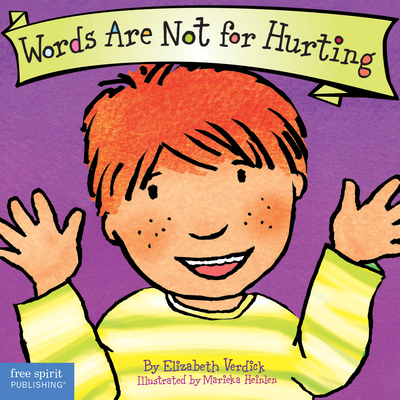 So as you probably noticed, I haven't written squat since May. However I'm back with a new series of posts about bigotry and unintentional bias in children & teen's literature. And lo, it shall be, and I shall call it "Books Are Not For Hurting!"
"Why?" you might be saying to yourself, "Why oh why should I care about Curious George and The Bernstein Bears when over 400 women have been murdered along the US/Mexico border?" Heads up, the messages we send kids when they're young -- be it through picture books, movies, tv, etc -- impact how our society changes (or doesn't) to address issues of social injustice like the inattention to what's going on in Juarez. Society starts early with messages that non-white bodies don't count when it fails to provide a noticeable body of literature featuring kids of color. Obviously, this also affects women, queer people, differently-abled folks, and so on. So as a background to why kids books aren't a utoptian playground of egality and justice, let's review! (Major h/t to Packaging Girlhood)
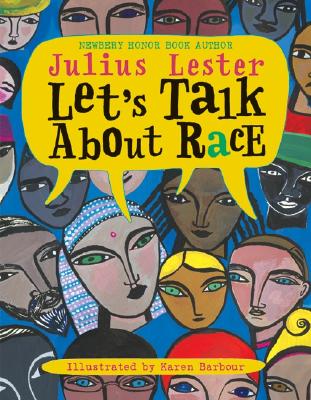 I'm a children's book buyer, so I see pretty much all the books that are published by major publishing houses each year. Most publishers send a box of samples of the picture books they are putting out for the season, along with a selection of uncorrected proofs of the novels, and of course a catalogue. I haven't had time to do any intensive counting and statistical-ness, but I'd estimate that 90% of the books that are published feature white children as the main protagonists. A growing number of picture books are featuring children of color as well as white protags, but most of these have kids of color in the background -- they are rarely the main protag of the book. Those books that feature children of color rarely have a child of color on the cover, and are frequently about serious subjects such as racism, slavery, the civil rights movement, etc. It is very rarely that I see a book with a main protag of color in which that child's race is not somehow related to the main problem of the novel/picture book.
 I'm often left thinking, Gosh, wouldn't it be nice if Fancy Nancy was black? or Wouldn't it be great if I'll Love You Forever featured latino kids? or Goddamnit I wish I could find a happy story about a black kid that isn't about racism!" Additionally, lots of books that have a main character of color end up with a white kid on the cover, à la the to-do about Justine Larbalestier's Liar which, despite being about a black girl, originally featured a white girl on the cover until there was major outcry.
And that's just the tip of the problem in regards to race. Think about how many picture books designate the "girl" animals with a hair bow, pink, skirts, or heavy eyelashes, whereas the normal animal is left to be read as the boy -- the boy as the default, the girl as altered, inauthentic & performative, if we're going to get academic about it (h/t Julia Serano).
 If a parent is featured, it is almost always a mother, particularly in any books featuring daily activities like washing, eating, cooking, hugging, etc -- you know, because dads don't care about their kids, that's the mom's job.
Which moves us on into relationships (what up Twilight?) Ah yes, the ever-popular fetishization of violence, most notably in the soon to be published Stolen by Lucy Christopher which apparently (according to the packaging, I haven't read it yet) describes a young woman's quest not to fall in love with her abductor and potential rapist.
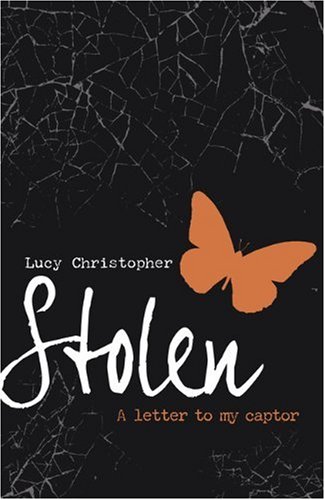 Admittedly it could be that Stolen is actually a well written book, and that it's just packaged badly, but it's indicative of what the publishing industry thinks is appropriate romance lit for teen girls: power imbalance, threats of violence, stalking, etc. (FYI, I'll actually be reading Stolen and posting a review later, so stay tuned). Then there's also all the heteronormativity (the always awesome Renee touches on this), not to mention the internalized homophobia in the coming-out books.
Oh I could go on forever (and do, on my goodreads feed). Trust me, the kiddie lit scene is fucked up. But the point is, we need to be talking about this more. The messages that kids get when they're young from picture books and novels are not neutral. Pictures are not neutral. We tend to think about books as being so much better for children than TV, magazines, the internet, and so on, but picture books and kids novels are subject to the same bias and bigotry that's present in the rest of our society. In fact kids books are probably a stronger hold out for conservative "values" since we have to Protect The Children and The Quality Of The Written Word and all. So! Welcome to my new series on kid's lit! I'll be getting together a list of questions to use as a tool when thinking about kid's literature, and I'll be using them to review stuff. And it won't all be negative either -- I'll also be posting profiles of authors, illustrators, books and publishers that are doing an awesome job. Hooray!
 (Note Martha, dressed in a pink skirt with a flower on her head, while George isn't even wearing pants).
Saturday, May 30, 2009
Spoken Word Saturdays: Suheir Hammad
I woke up with this poem in my head today, so here is Suheir Hammad performing "Not Your Exotic, Not Your Erotic" at the Def Poetry Jam.
Monday, May 25, 2009
Spoken Word Saturdays: Self Watering Containers!!!
I have been absent for an unforgivable length of time. BUT! I'm nicely settled in my new apartment with (almost) no unpacked boxes AND a baby tomato plant that is about to become the Happiest Tomato Ever. Why? Because it will get just the amount of water it wants, and I will only have to water it once a week. Thus is the magic of Self Watering Containers. And in honor of such, instead of our regular Spoken Word Saturdays (which I'm super late on anyway), here is a video of how to make your very own SWC.
Wednesday, May 13, 2009
PSA
So I just moved into a new apartment and I don't have the internet at all right now, so sorry for the delayed posting. In fact, I think it's just going to have to be on hiatus until the situation can be remedied. But rest assured, soon I will be back with full wireless in my apartment and things can go back to normal.
Sunday, April 26, 2009
Spoken Word Saturdays: Mayda Del Valle
Sorry I'm late this week. I'm in the midst of getting ready to move. Here's Mayda Del Valle performing "I'm Going Back" at the Def Poetry Jam
Sunday, April 12, 2009
Spoken Word Saturdays: Yellow Rage
Oh no! I forgot yesterday! But here we are, a day late: Yellow Rage performs "Chinky Eyes."
Saturday, April 4, 2009
Spoken Word Saturdays: Sunni Patterson
Another Sunni Patterson poem because she is SO FLIPPIN' AWESOME. Here she is performing "We Made It" at the Def Poetry Jam.
Sunday, March 29, 2009
Book Reviews: In The Time of the Butterflies
 A few weeks ago I spent the evening (and a lot of the night!) rereading Julia Alvarez's In the Time of the Butterflies. I had forgotten how devastating and amazing this book is.
In the Time of the Butterflies tells a fictionalized version of the lives of the Mirabal sisters -- Patria, Minerva and María Teresa -- who were assassinated for their resistance to Dominican dictator Rafael Trujillo on November 25th 1960, when they were killed on a lonely mountain pass on the way home from visiting their incarcerated husbands. Alvarez's retelling begins in the 1930s when the sisters are very young and switches the point of view of each chapter to a different Mirabal sister, including Dedé Mirabal, the only sister still alive. Alvarez emphasizes the humanity of these women who have become larger-than-life figures -- María Teresa is only 10 when her first chapter begins. She tells her Little Book:
"I don't know if you realize how advanced I am for my age? ... I knew how to read before I even started school! ... My penmanship is also very pretty as you will have noticed. I've won the writing prize twice, and I would have this week, too, but I decided to leave some i's undotted. It doesn't help with the other girls if you are best all the time."From childhood scribblings to the retellings of their imprisonment, gun-smuggling, near misses with Trujillo, and eventual deaths, Alvarez's book is beautiful and absolutely devastating. It reminds me of Kelly Tsai's poem, "Little Red Books:"
"my friend signs off all his emails / siempre luchando / paz y revolucion / as if the two were possible / peace and revolution / as if bloodless wars didn't still tear psyches apart / change hurts / living it is hard / we've got to be ready / if we decide to / zhan qi lai / stand up / zhan qi lai / zhan qi lai."It's easy to deify activists like the Mirabals. It's easy to glorify their actions and call for a revolution, but we do them a disservice by forgetting their humanity and the horror of what they went through in the backlash to their actions. In her postscript, Alvarez says:
"What you will find here are the Mirabals of my creation, made up but, I hope, true to the spirit of the real Mirabals... For I wanted to immerse my readers in an epoch in the life of the Dominican Republic that I believe can only finally be understood by fiction, only finally be redeemed by the imagination. A novel is not, after all, a historical document, but a way to travel through the human heart."I feel like this is the moral calling of great fiction and poetry -- to demonstrate the passion, terror, devastation, humanity and beauty in historical events that have been trammeled into bloodless factoids of banal, dispassionate textbooks.
A few months ago while looking for a book for my students to read that month I was struck by the inability of kids biographies to make their subjects passionate, interesting and human to their readers. My students and I had just finished reading Twelve Rounds to Glory, which is an illustrated biography of Muhammad Ali written in poetry. It fucking rocked because it was passionate and creative and talked seriously about racism and my students were friggin INTO IT. So I was looking for something similarly awesome and passionate about a woman of color for the next month, but nooOOOooo. Everything was stale non-fiction bore-the-pants off you crap. And about awesome people like Sojourner Truth and Harriet Tubman and Daisy Bates. I want fantastic kids biographiess about the Mirabals and Audre Lorde and Gloria Anzaldua. Imagine if, after talking to my boys about their sexist behavior and trying to convince them that girls are strong, we could all read a biography of the Mirabal sisters.
Boys Will Be Boys: Everyday Misogyny in the Classroom
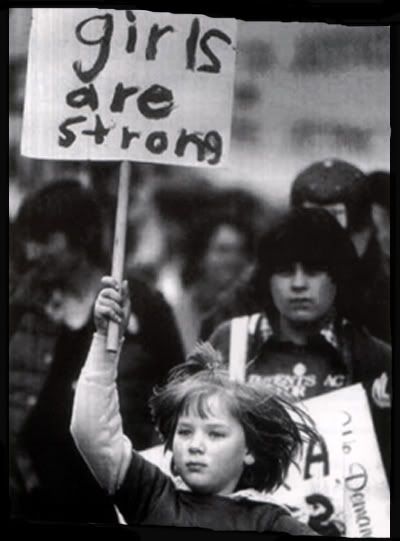
So I tutor groups of exchange students at a school grades 5 through 9. As soon as I started working there, I noticed that it was 90% boys; however, most of my classes have (obviously) had only boys in them, so gender relations hasn't come up much. My class this semester, however, has 7 students, only 2 of whom are girls. (Two of the five in the entire school, mind you). The boys in this class will regularly refuse to sit next to the girls or to be on teams with them. They make faces and groan when I make them work together. At first I wasn't sure what to do exactly because of course the same thing happened to me when I was in school. I was just like "oh well, that's what kids do, they pretend that boys and girls have cooties."
But really, it's sexist and hurtful and I'm not having it. Maybe it's different in schools where the gender ratio is more balanced -- maybe it's not sexist then -- I'm not sure, I still have to think about it. But what has been going on in my classroom has certainly been a product of a misogynistic mindset. My students and I have talked extensively about race and racism this semester and the conversations we've had have been very productive and strongly felt. When responding to homophobic remarks I have explained to them that hating someone because they're gay is the same mindset as hating someone because of their race. I have to say that I haven't heard a single homophobic slur since. When I talked to them about the misogyny that's been going on I drew a similar parallel. I'm not sure that the main ringleader was much fazed, but the four other boys looked pretty abashed. And, as a teacher, if you can the followers on your side, you've already gone a long way towards controlling your troublemaker.
What would happen if teachers across the country started refusing to let boys ostracize girls simply for being female? What would happen if teachers started calling boys on being sexist and proactively taught their young students about the effects of sexism, racism and other prejudices? Not just as a history lesson mind you, but to say: "Here, we've learned about racism in the past. We've learned about Muhammad Ali and the Civil Rights Movement. Here are the ways that you are perpetuating the same hateful thinking in your own life. This is the way that fear of difference goes down in our classroom. How do you feel about it? What are you going to do about it?"
Saturday, March 28, 2009
Saturday, March 21, 2009
Spoken Word Saturdays: Sunni Patterson
Sunni Patterson performs "We Know This Place" on Hip Hop Speaks
Sunday, March 15, 2009
Our Deplorable Immigration System
Today the Associated Press released a report conducted January 25th analysing the detention system for undocumented immigrants. The report shows that most immigrants who are currently detained have "no criminal conviction, not even for illegal entry or low-level crimes like trespassing." They also report that "More than 400 of those with no criminal record had been incarcerated for at least a year. A dozen had been held for three years or more; one man from China had been locked up for more than five years." This is despite a 2001 ruling by the Supreme Court that the ICE has six months to either deport or release people they've detained. You should really read the whole article though because it just gets more shocking.
Ask Obama to end the detention of immigrants, whether they are undocumented or not. Ask the rest of your elected officials to do the same. You may use my letter (below), if you like, or write your own.
Ask Obama to end the detention of immigrants, whether they are undocumented or not. Ask the rest of your elected officials to do the same. You may use my letter (below), if you like, or write your own.
Dear President Obama,
I campaigned for you in Missouri and it still makes me crazy happy to hear people on the radio say "President Obama." I'm glad to see that you've put a stop to the Global Gag Rule, created an office for Women's and Girls' Issues, and ordered the closure of Guantanamo Bay. I'm writing to you today to ask you to do something about the immigration system and particularly the detention system for immigrants.
The Associated Press reports that most immigrants who are currently detained have "no criminal conviction, not even for illegal entry or low-level crimes like trespassing." They also report that "More than 400 of those with no criminal record had been incarcerated for at least a year. A dozen had been held for three years or more; one man from China had been locked up for more than five years." This is outrageous! The article further reports that despite a 2001 ruling that ICE has only 6 months to either deport or release people they've detained, the ICE has flouted this deadline and held more than 900 people for longer than six months.
Our prison system is already bloated, abusive, and of questionable efficacy; it is shameful and condemnable that we are engorging the prison system by locking up folks who have committed no crime, just for being from out of town. When we lose our compassion and start locking up people just because they're different from us we have also lost our humanity.
Please do something to end this crisis in the immigration system. Please release those people who have been detained and never charged. Please release those people who have committed no crimes. Please allow those people who have committed low-level, non-violent crimes or misdemeanors access to bail. Please help those folks who are here undocumented to become documented and to learn English if necessary. Please stop the incarceration and deportation of undocumented people and children who have committed no crimes.
Thank you for your time. I look forward to your steps to end this deplorable situation. Here is the link to the article I'm referring to: http://news.yahoo.com/s/ap/20090315/ap_on_re_us/detained_immigrants
Sincerely,
DontBoxSarah
Saturday, March 14, 2009
Spoken Word Saturdays: Suheir Hammad
Suheir Hammad performs "First Writing Since" and the Def Poetry Jam.
Saturday, March 7, 2009
Spoken Word Saturdays: Gina Loring
Gina Loring performs "Somewhere There is a Poem" at the Def Poetry Jam
Sunday, February 15, 2009
Spoken Word Saturdays: Sweet Honey In the Rock
Sweet Honey in the Rock performs "Peace." Check out their Live in Carnegie Hall album. It has a bunch of awesome pieces on it like "Letter to Dr. Martin Luther King," "Emergency" (about apartheid) "Ode to the International Debt," and "Are My Hands Clean" (corporate greed & sweatshops).
Saturday, February 14, 2009
To grow up hypnotized / and then try to shake yourself awake / because you can sense what has been lost / you can sense what is at stake
"Unless one lives and loves in the trenches, it is difficult to remember that the war against dehumanization is ceaseless."
-- Audre Lorde
So, I've written about this before, but I want to say it again because I think it's really important. I've been thinking tonight about how easy it is to forget the truth if you don't hear it being consistently repeated to you. Even if it's something you know is true. Even if it's something that you discovered yourself. Even if it's something you've written about extensively. If it's not something that's reinforced by society, if it's not something you hear about all the time, if it's not something you make a conscious effort to remember, you'll forget about it. You'll have a vague feeling that something is wrong, something is not right, but you won't be able to remember why.
I remembered this today because I was trying to explain to my friend C that a person could be "unwilling to come out" even if they have supportive friends and family. And I knew that it was possible, I knew that "unwilling to come out" wasn't really the right words, I knew that I had experienced it for christsake, but I couldn't remember what was wrong with it. Fortunately I happened to be rereading my journal tonight and I figured out why. It's not because they don't want to come out, it's because sometimes they don't realize they're Queer. Because it's not been presented to them as an option, because they're still trying to reconcile themselves with what society is telling them
It's the same thing with not having your truth repeated to you on a daily basis. Our society can prattle on as much as it wants about tolerance and acceptance and live-and-let-live, but being Queer is still not presented as a viable option for children's future selves. If the social models you're presented with don't fit with your own identity, you're left walking around with this weird vertigo -- wasting your time trying to fit your identity into the models you've been given.
For example, I can't believe how much time I wasted feeling insecure and outsiderish because the idea of being attracted to women was never presented to me as a personal option. I knew people were gay. I knew gay people, but certainly that was never something that I would ever be. It's great to say that we're accepting of difference and that we support people in loving whoever they want -- but society gives zero models for how to live your life as a Queer person. So if you are Queer, you spend the first 20 or so years of your life wasting time trying to fit your understanding of society and your personal experiences together -- trying to squeeze yourself into a mold that you don't fit.
It doesn't mesh, so even if you don't have a big dramatic angsty personal crisis of feeling unfit to live, you still have this weird vertigo of being unable to understand and name the things you're going through and the way you feel. It's not like I was ever like "Oh my god, I'm attracted to a girl! I don't understand!" Nothing so overt or dramatic. Because for the longest time I didn't even realize that I was Queer. I just spent years berating myself for not being proactive about flirting with boys and not putting myself out there for dating them. I certainly wanted to date a boy, in the theoretical at least, because society presents it as the ultimate experience for women, and it seemed exciting and it was SO LAME not to. But at the same time I was terrified around boys that they would think I was attracted to them. But I didn't even realize that that was why I was so awkward and apprehensive and terrified -- thinking it was because I was stupid and too wrapped up in not wanting to do the stereotypical dating thing. Feeling CRAZY insecure for YEARS because I had never kissed anyone, even though there was never anyone I wanted to kiss.
What a waste of my time. I could have been having (or at least pursuing) relationships with people I was actually interested in. I feel quite certain that if I hadn't spent 4 years at a women's college where there were plenty of women who were repeating truths similar to my own, that I would still be wandering around trying to date men, wondering why I was so unhappy, and blaming myself for it. That's why it is SO important for Queer people and their friends to be visible and publicly Queer and present that as an option for other people. Not because of some stupid HRC-ish reason about trying to gain "tolerance" by showing that "we're just like you." We're not just like you. That's the point. We have to speak up about our own truths so that others can find their own way into their selves and stop trying to cram themselves into what society tells them.
It's scary to think that our selves are so mutable, so influenced by the messages we get from society, so easily erased by the company we keep and the things our friends say to us. I guess in some ways it's powerful because it means that one or two people can easily have a profoundly positive impact on another person, but it also means that a person's convictions, identity and self can be essentially erased simply by not having a community of similar people who will repeat their selves and their identities and truths to each other.
So SPEAK UP! Whether you're Queer or not. Tell the truth to children. Acknowledge in casual conversation that people have different identities and different experiences. Make sure that your words and actions don't unintentionally oppress others. Surround yourself with people who will embrace your identity instead of trying to ignore it or assimilate it or trample it down. Repeat the truth of your identity to everyone -- they need to hear it.
"As we are liberated from our own fear, our presence automatically liberates others."
-- Nelson Mandela.
"The power of resistance is to set an example: not necessarily to change the person with whom you disagree, but to empower the one who is watching and whose growth is not yet completed, whose path is not at all clear, whose direction is still very much up in the proverbial air."
--Tim Wise
**Title Lyrics from Reprieve by Ani DiFranco
Saturday, February 7, 2009
Spoken Word Saturdays: Damali Ayo
Damali Ayo panhandles for reparations. She collects money from white people and gives it to black people as a way to start conversations about race, privilege, and oppression. Since she first did this, people have been joining her nationally on October 10th of every year. You can read more about all her performances, read an interview with her about reparations, join the National Day of Panhandling for Reparations, and see pictures and stories from people who participated last year.
Subscribe to:
Posts (Atom)

 Posts
Posts

